
Shoei Pinlock insert compatibility is decided by the visor on the front of your helmet, not by the model name on the side of it. Two riders with helmets called the same thing can need different inserts, and two riders with completely different helmets can need the same one. The part that matters is the shield, and every one of those shields carries a code moulded into the plastic.
Aftermarket visors for Shoei helmets

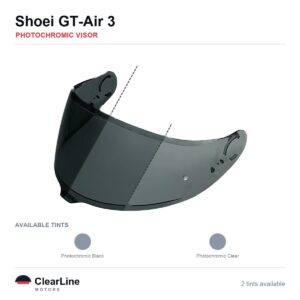
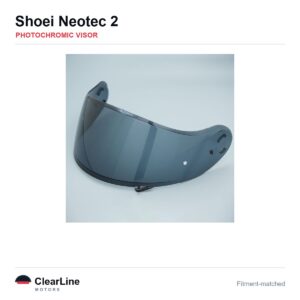
The short answer: match the insert to the code on your visor, not to your helmet’s name. Find the moulded code near the edge of the visor or behind the base plate, then buy the Pinlock-compatible anti-fog insert cut for that shield. If the code has worn away, measure the visor rather than guessing from the helmet model, because Shoei has reused model names across more than one shield generation.
Why your helmet name is the wrong starting point
Helmet names travel. The same physical helmet is sold as the NXR in the United Kingdom and the RF-1200 in the United States, and Shoei has run several model names in parallel across different markets for years. A name tells you which marketing region you bought in. It does not reliably tell you which shield is clipped to the base plate.
Model names also outlive their hardware. A helmet line can run for a decade and change its shield part way through, so “my helmet is a GT-Air” covers more than one visor generation. An insert cut for the wrong generation will either refuse to seat on the pins or sit proud of the visor and leak air around the silicone bead.
This is the same trap that catches people buying replacement shields, and it is why we built the visor finder tool around models and codes rather than names alone. Start at the visor and you skip the guesswork entirely.
Find the code moulded into the visor
Take the visor off the helmet, or open it fully and look along the lower edge. Shoei moulds the shield code into the plastic, usually near one of the side pods or along the bottom lip where it does not sit in your line of sight. The text is small, unpainted and the same colour as the visor, so angle it against a light rather than looking at it flat.
You are looking for a short code beginning CWR, CNS or CJ, sometimes with a number and a letter after it. That string is the only identifier that matters for an insert. Write it down before you order anything.
If you have kept the old packaging, the same code is printed on the box. Our guide to reading the part number moulded into your old visor walks through where each manufacturer hides it, including the Shoei positions.
The CWR visor families on Shoei helmets
CWR is the full-face and sports shield family. Three CWR generations are in common use on the road today, and our verified fitment data groups them as follows. Every grouping below comes from confirmed fitment records, not from supplier listing text.
| Shield code | Helmet models verified against it | Type |
|---|---|---|
| CWR-1 | NXR, RF-1200, Z-7, X-Fourteen, X-Spirit III, X-14 | Full-face and sports |
| CWR-1 | RYD, RF-SR (a separate helmet pair sharing the same base plate) | Full-face |
| CWR-F2 | NXR2, RF-1400, Z-8 | Full-face |
| CWR-F2R | X-SPR Pro, X-15, X-Fifteen | Race, tear-off ready |
| CNS-2 | Hornet ADV, Hornet X2 | Adventure, with peak |
Each row is a group we hold verification for. We do not claim fitment across rows: a CWR-F2 and a CWR-F2R are close relatives, but they are listed separately because they are separate shields with different edge hardware. Treat the row your visor sits in as the boundary.
If you are choosing between the two older sports shields, our comparison of the CWR-1 and CWR-F shields covers the base-plate differences in detail. For the current race shield, the X-SPR Pro fitment guide is the closer match.
The CNS and CJ visor families
CNS covers the touring, adventure and flip-front shields, and CJ covers the open-face and jet shields. The CNS-2 grouping above is verified, and it is the one adventure riders ask about most often.
The other CNS and CJ codes are a different matter, and this is worth saying plainly rather than glossing over. Our fitment data holds those codes as vocabulary only — we know the codes exist and appear on shields fitted to Shoei helmets, but we do not hold a verified record of which helmet models share them. We therefore make no compatibility claim for them, and neither should any listing you read.
The practical consequence is simple. For a touring or open-face helmet, read the moulded code and buy the insert cut for that exact code. Do not reason from the helmet name, and do not assume two touring helmets from the same era share a shield. Our guide to what changed at the visor between Neotec generations shows how much can move inside one model name.
For the touring insert itself, we stock an anti-fog insert for the Shoei GT-Air II, GT-Air and Neotec. The models named there are the ones listed on that product in our own catalogue, which is a starting point for your search rather than proof that the three shields are interchangeable. Check your moulded code against it before ordering.
Deciding which anti-fog insert to fit? See how the options compare, ours and the helmet makers’ own, in our guide to the best anti-fog inserts for motorcycle visors.
Shoei Pinlock insert compatibility when a model spans two visor generations
This is the case that produces most of the returns. A helmet line runs for years, the shield is revised, and the model name stays the same. The rider searches the name, finds an insert that says it fits, and receives one cut for the other generation.
There are two reliable ways through it. The first is the moulded code, which is generation-specific and cannot lie. The second is the base plate: if the shield is held by a mechanism that looks nothing like the pictures on a listing, you are on a different generation regardless of what the helmet is called.
Where a helmet genuinely offers more than one shield option, the insert follows the shield you actually have fitted, not the one the helmet shipped with. Riders who have swapped to a different visor sometimes forget this and order against the original specification.
Pin posts, tabs and the seal that does the work
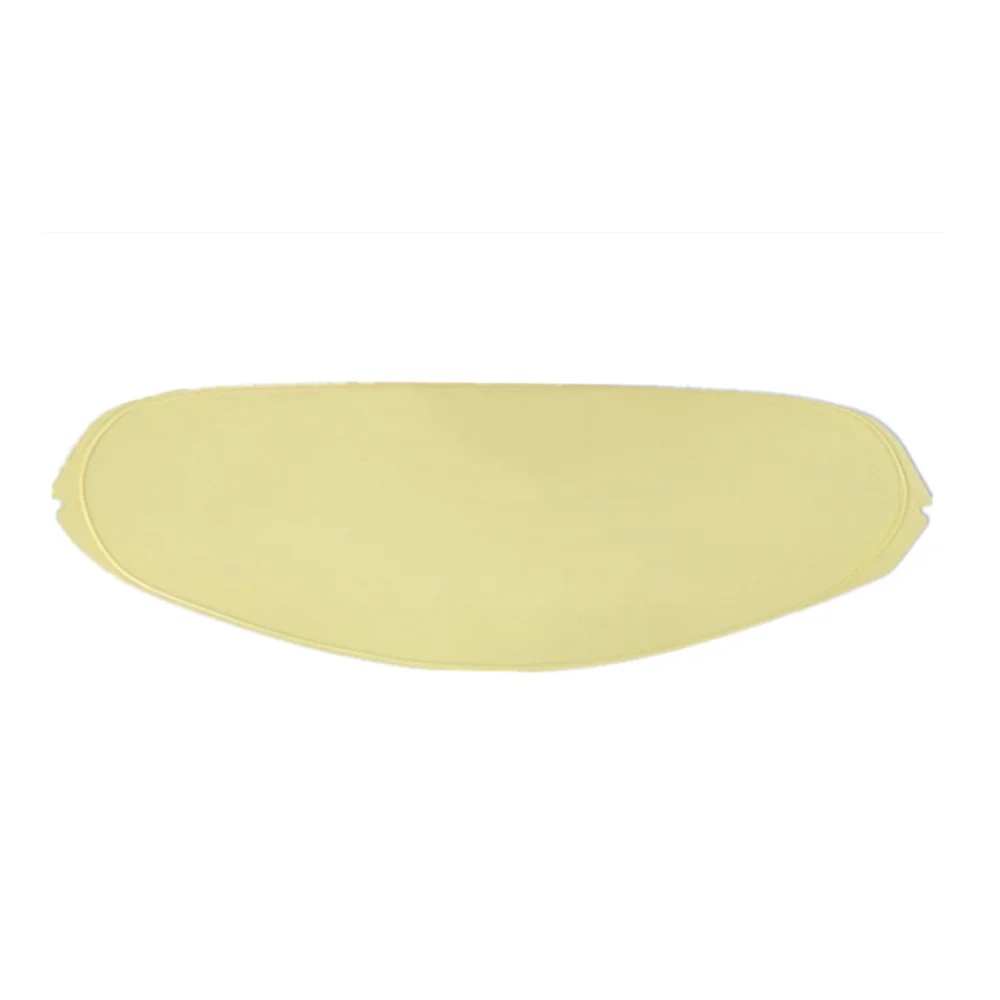
A pin-style insert works by tension. Two eccentric pins sit in holes at either side of the visor, and turning them draws the insert against the shield so the silicone bead around its edge makes a continuous seal. The sealed pocket of air between insert and visor is what stops your breath condensing on the cold outer surface.
That means three things have to be right: the insert must be the correct shape for the shield, the pins must be the correct length, and the bead must be unbroken. Get the shape wrong and the bead cannot touch the visor evenly, which is why a near-miss insert fogs at the corners even though it clips in.
The physics behind the coating itself is well documented. Research on anti-fog coatings published in Advanced Science describes how, with a hydrophilic antifogging coating, “condensed water spreads into a pseudo‐film shape” instead of beading into the tiny droplets that scatter light. A continuous film is transparent; a field of droplets is not.
Fitting the insert without leaving marks
Fit the insert in a warm room with clean, dry hands. Flex it gently into the visor, locate both pins, then turn them to draw it down. If you have to force it, stop and re-check the code, because a correct insert seats with light pressure.
The inner face of the insert is the treated side and it is soft. Fingerprints and cloth marks on that surface do not polish out, so handle it by the edges from the moment it leaves the packet. Our step-by-step guide to fitting a pin-style anti-fog insert correctly covers the pin adjustment in detail.
Cleaning is its own discipline. The treated coating will not survive solvents or dry wiping, which is why we wrote a separate guide to cleaning a visor that has an anti-fog insert fitted. The Highway Code rules for motorcyclists are direct on the underlying point, telling riders to check before each journey that “visor is clean and in good condition”, and noting that “Scratched or poorly fitting eye protectors can limit your view”.
Tint, photochromic visors and the law
Inserts are sold for clear, tinted and photochromic shields alike, and the insert itself does not change the light transmission of the visor it sits behind. Fitting one to a dark shield does not make that shield any more usable at night.
An iridium or mirrored visor is never road legal in the United Kingdom, day or night, because those finishes transmit too little light to be legal for road use. The legal test is the marking carried on the individual visor rather than its colour or its tint name, so check the marking on the item in front of you. We do not verify the markings on individual items and make no claim that any product we sell is approved or certified for road use.
If you want one visor that adapts instead of carrying a spare, a photochromic shield is the usual answer, and it takes an insert in the same way a clear one does. Our guide to running a pin-style insert on a photochromic visor explains the interaction between the two layers.
When the moulded code has worn away
On a well-used visor the moulded text can polish flat, particularly along a lower edge that has been wiped a thousand times. If you cannot read it, do not guess from the helmet name.
Measure instead. The width across the visor at its widest point, the height at the centre, and the distance between the two pin holes together identify the family quickly. Photograph the base plate as well, because the mechanism is generation-specific.
Browsing by helmet model is still a sensible cross-check, and our visors and inserts that fit Shoei helmets are grouped that way. If you would rather compare shields by type first, the clear replacement visors range is organised by fitment. Shipping is free to the USA, UK, Canada, Australia and Europe.
One point on naming, since it causes confusion: Pinlock® is a registered trademark of its owner. The inserts we sell are Pinlock-compatible parts that fit Pinlock-ready visors, and they are not Pinlock-brand products. If you are weighing the options, our look at pin-style insert brands beyond Pinlock sets out what differs between them.
Visors and inserts mentioned in this guide
- Shoei NXR2 / RF-1400 / X-Fifteen / X-SPR Pro & more Anti-Fog Insert — Stops Visor Fogging
- Anti-fog insert for the Shoei GT-Air II, GT-Air and Neotec
- See the full Shoei fitment range
- Pinlock-compatible anti-fog inserts
Frequently asked questions
Does a Pinlock insert fit every visor on a Shoei helmet?
No. An insert is cut for a specific shield family, so it fits the visors in that family and no others. A visor also has to be pin-ready, with the two eccentric pin holes drilled at the sides, before any pin-style insert can be fitted to it.
Can I move an insert from one visor to another?
Only if both visors carry the same moulded shield code. Moving an insert between two shields of the same family is routine and does it no harm, provided you handle it by the edges. Moving it to a different family will not seal even if it clips in.
Why does my insert fog up around the edges?
Edge fogging almost always means the silicone bead is not sealing evenly. The usual causes are an insert cut for a different shield, pins that need adjusting to increase tension, or dirt sitting on the bead. Re-check the shield code first, then the pin adjustment.
Do I need a different insert for a photochromic visor?
You need the insert cut for that visor’s shield family, exactly as you would for a clear one. Photochromic shields are pin-ready in the same patterns, and the insert sits behind the reactive layer without affecting how it darkens.
How do I find the code if the visor is fitted to the helmet?
Open the visor fully and look along the lower edge and around the side pods, angling it against a light. If the text is still not readable, removing the shield takes a few seconds on most Shoei base plates and gives you a clear view of the whole edge.
Written by the ClearLineMoto team. More about how we assemble and check our fitment data is on our about page.