If you ride a Shoei Neotec and the visor is scratched, hazed or simply the wrong tint for the season, the first question is always the same one: which visor actually fits the helmet in your hands? Put plainly, it is a Shoei Neotec 2 vs Neotec 3 visor question, because the Neotec name has run across more than one generation of modular helmet and the visor is not a one-size part. This guide explains how to identify your model, what ClearLine lists for the Neotec 2 and the Neotec 3, and what the law in Great Britain says about tint before you choose one.
Aftermarket visors for the Shoei Neotec

The short answer
- ClearLine lists the Shoei Neotec 2 and the Shoei Neotec 3 as separate visors, in separate product categories. Order against the exact model printed on your helmet.
- We make no claim that a Neotec 2 visor and a Neotec 3 visor interchange. Our fitment data does not verify that, so we do not state it.
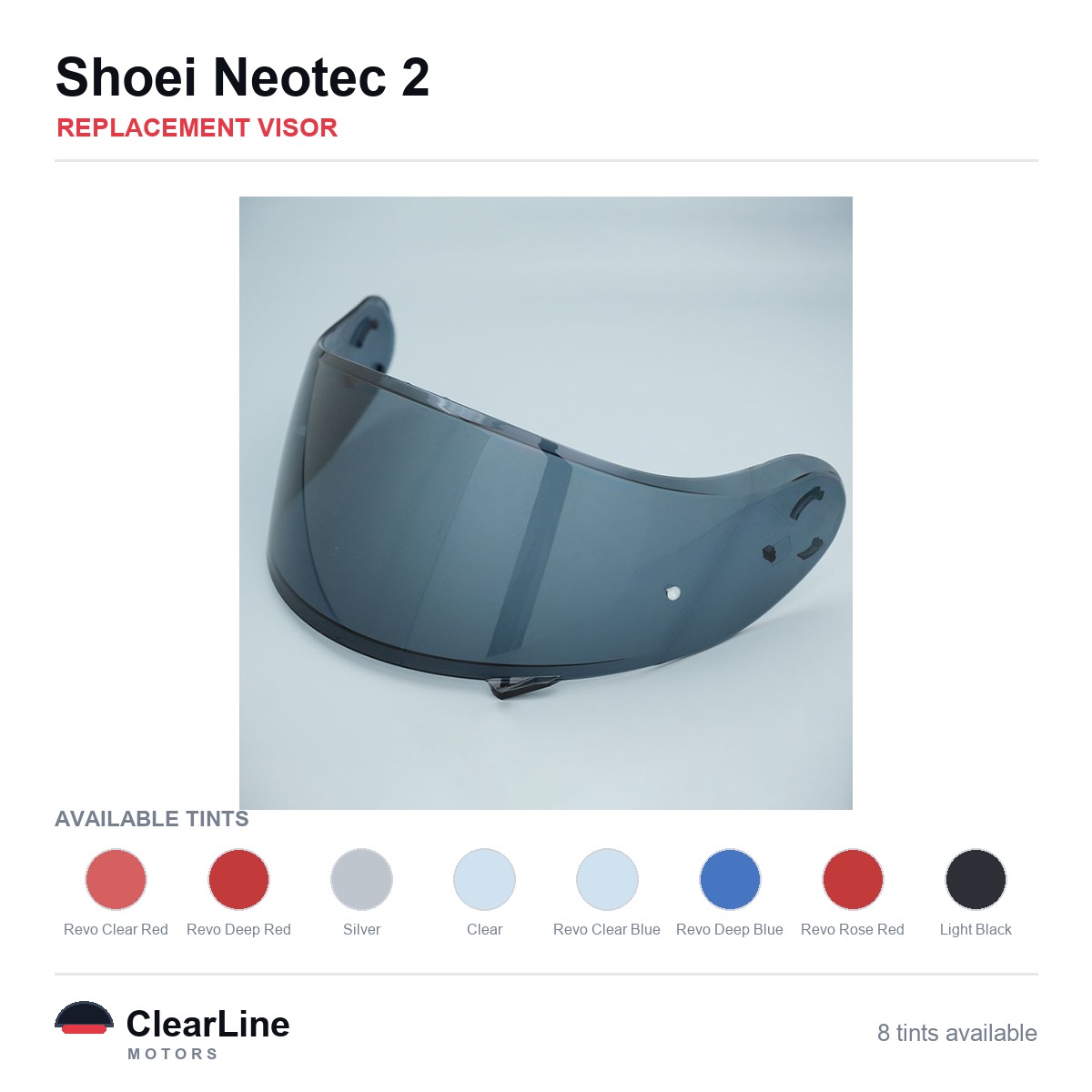
- Three things are listed per generation: a replacement visor in several tints, a photochromic visor, and a Pinlock-compatible anti-fog insert.
- Iridium, mirrored and dark smoke visors transmit too little light to be legal for road use in Great Britain, day or night.
- The legal test is the marking on the individual visor, not its colour or the name of its tint.
How to tell which Shoei Neotec visor you need
Start with the helmet, not the visor. Shoei prints the model name on the shell or on the chin bar of its modular helmets, and that printed name is the only identifier worth trusting when you order a replacement part. A visor bought against a guess is a visor that goes back in the box.
If the badge has worn away, the next best evidence is your original purchase paperwork or the label inside the comfort lining. Riders often describe their helmet by the year they bought it, which is a poor guide, because a dealer can be selling stock from an earlier production run. Confirm the model name in writing before you choose a part.
Once you have the model, the rest is straightforward. Our category pages for Shoei models is split by helmet model, so you can go directly to the Neotec 2 listings or the Neotec 3 listings and see only the parts filed against that model. If you are still unsure, the visor finder tool walks you through it by brand and model.
Shoei Neotec 2 vs Neotec 3 visor: what our catalogue lists
The clearest way to answer the comparison question is to show what exists for each generation rather than to speculate about shared parts. Every row below is taken from our live product listings, not from a parts diagram.
| What you are ordering | Shoei Neotec 2 | Shoei Neotec 3 |
|---|---|---|
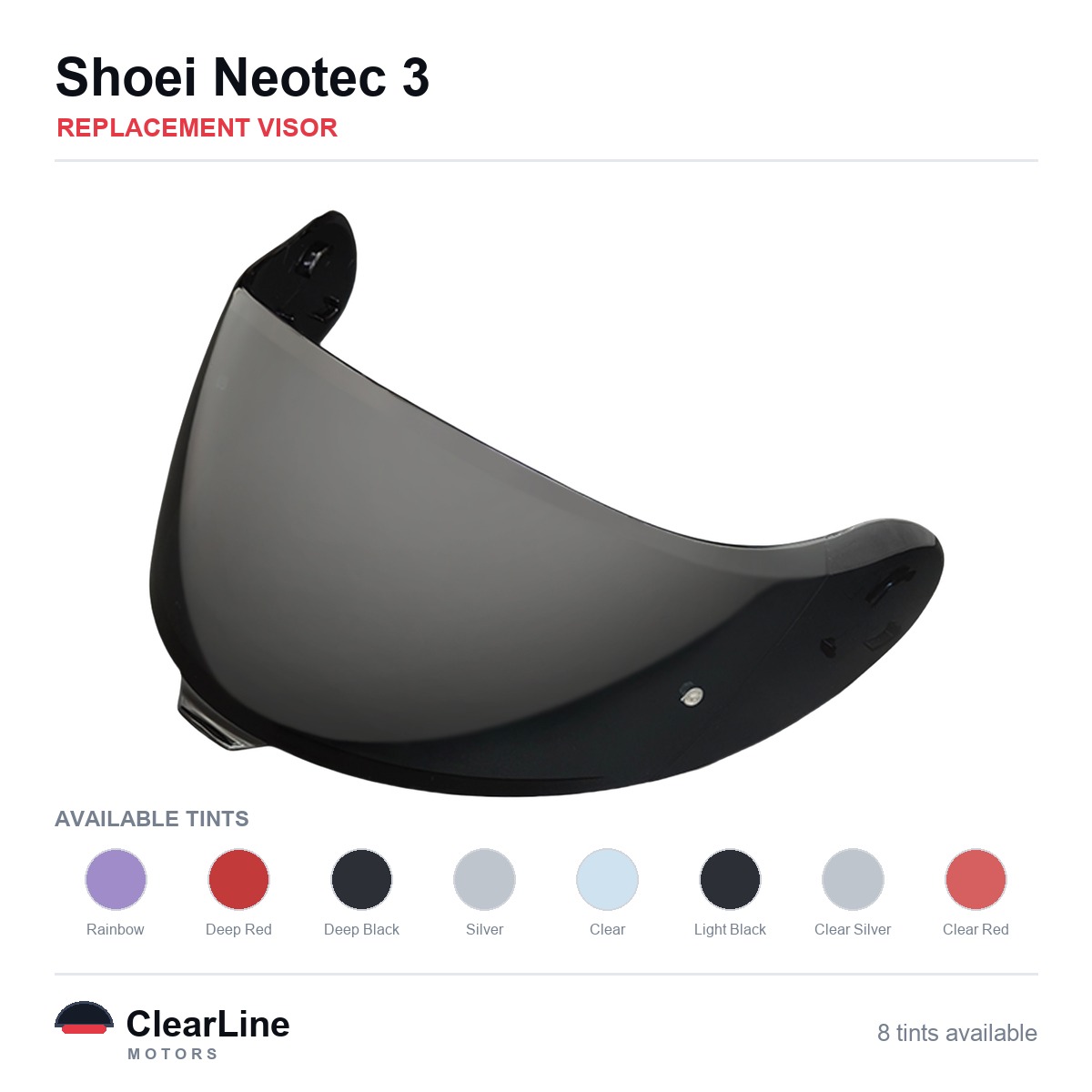
| Replacement visor, multiple tints | Shoei Neotec 2 Replacement Visor | Shoei Neotec 3 Replacement Visor |
| Auto-tinting photochromic visor | Shoei Neotec 2 Photochromic Visor | Shoei Neotec 3 Photochromic Visor |
| Pinlock-compatible anti-fog insert | Shoei Neotec 2 Anti-Fog Insert | Shoei Neotec 3 Anti-Fog Insert |
| Model category page | Neotec 2 visors | Neotec 3 visors |
Both generations are covered by the same three product types, so nothing is missing from either side. What differs is the part itself, which is filed against one model and sold against one model.
Why we list the two generations separately
Visor fitment is a safety matter before it is a shopping matter. A shield that sits a fraction proud of the eyeport seal can let water track in, lift at speed, or fail to latch the way the designer intended. That is why we treat cross-generation fitment as something to be proven rather than assumed.
Our verified fitment data groups helmet models that genuinely share a shield, and it does not currently contain a verified group covering the Neotec generations. Supplier listings sometimes bundle several model names together, but a bundled listing is sales copy, not verification. Where we cannot verify a shared part, we say nothing rather than guess.
The practical consequence is simple. Buy the visor filed against your own model, and treat any claim that an older Neotec shield drops onto a newer one as unverified until the helmet manufacturer confirms it for your exact pair of models.
Tints and the law in Great Britain
Tint is where riders get caught out, so it is worth being precise. The Motor Cycles (Eye Protectors) Regulations 1999 prescribe eye protectors meeting “Grade X in British Standard BS 4110:1979”, along with grades XA, YA and ZA of the amended standard and certain equivalents, and they require the protector to be “marked with an approved certification mark of an approved body”.
Read that carefully, because it decides everything. The test is the marking carried by the individual visor, not how dark it looks and not what the tint is called in a shop listing. BS 4110 is the standard for visors; BS 6658 is a helmet standard and answers a different question entirely.
Against that test, iridium, mirrored and dark smoke visors transmit too little light to be legal for road use, at any hour. Selling an eye protector as authorised for road use when it is not of a prescribed type is an offence for the seller under section 18(4) of the Road Traffic Act 1988, which is why we describe tinted visors as track and off-road items and never certify any individual item ourselves. The offence is non-endorsable. This guide describes the position in Great Britain only.
The Highway Code adds the everyday version of the same point. Rule 83 asks riders to “check that your helmet visor is clean and in good condition”, and rule 84 warns that “Scratched or poorly fitting eye protectors can limit your view when riding”, particularly in bright sun and after dark. A clear visor you can actually see through is the baseline.
Photochromic visors for the Neotec 2 and Neotec 3
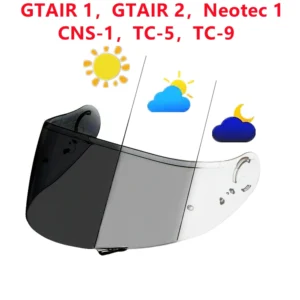
A photochromic visor darkens in ultraviolet light and clears again when the light drops, which is why searches for a “transition visor” land on the same product. It suits riders who leave in daylight and come home after sunset and would rather not carry a spare shield in a rucksack.
Both Neotec generations have one listed, and each is filed against its own model. The trade-off worth knowing before you order is that the change is not instant, and the visor does not reach full clarity or full darkness the moment the light changes. Ride into a long tunnel and you are riding on whatever state the visor is currently in.
If you want to compare the auto-tinting option across brands and models before committing, the photochromic visor range collects them in one place. The same tint rules above still apply to the darkened state, so treat the marking as the deciding factor.
Anti-fog inserts: matching the insert to the visor
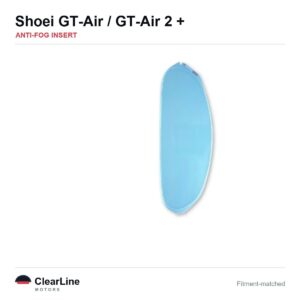
Fogging is a fitment question in disguise. An anti-fog insert seals against the inside of one specific shield shape and relies on pins set into that shield, so an insert cut for one model will not seal correctly on another. That is the same reason the visors themselves are listed per model.
We list a Pinlock-compatible insert for each Neotec generation. These are aftermarket inserts designed to fit Pinlock-ready visors; they are not Pinlock-brand parts, and we do not present them as such. Fit one into a clean, dry visor and leave the seal to settle before you ride.
If you are working through a fogging problem rather than shopping for one part, the anti-fog insert guide and range covers venting, seal condition and insert choice together. A visor that fogs the moment you stop at lights usually has more than one cause.
Fitting a replacement visor without damaging the base plate
Work on a soft surface with the helmet on its side, never on a hard bench where a dropped shield can chip. Open the visor to its highest position first, because the release mechanism on a modular helmet is designed to disengage there and forcing it anywhere else is how tabs break.
Release one side fully before you touch the other, and let the shield come away rather than pulling it. When you refit, seat the shield squarely and close it once slowly to check the seal meets the eyeport all the way round. A visor that needs force to latch is a visor that is not seated.
Leave the protective film in place until the visor is on the helmet, then peel it. It is the cheapest scratch insurance available, and a fresh clear replacement visor earns its keep only if it stays unmarked through fitting.
What to check before you order
Confirm the model name on the helmet, then pick the listing filed against that model. Choose the tint against where you actually ride, and remember that a dark tint narrows your options for road use rather than widening them.
Decide at the same time whether you want an anti-fog insert, because fitting one later means taking the visor off again. Shipping is free on our orders, and the timescale is shown at checkout. Everything ClearLine sells is aftermarket, made to fit the helmet named in the listing, and is not supplied by or affiliated with the helmet manufacturer.
Visors and inserts mentioned in this guide
- Shoei Neotec 3 Replacement Visor — Iridium, Smoke, Clear Tints
- replacement visor for the Shoei Neotec 2
- See the Neotec 3 photochromic visor
- auto-tinting visor for the Shoei Neotec 2
- anti-fog insert for the Shoei Neotec 3
- See the Neotec 2 anti-fog insert
- All Neotec 3 visors and inserts
- All Neotec 2 visors and inserts
Frequently asked questions
Does a Shoei Neotec 2 visor fit a Neotec 3?
We do not claim that it does. Our verified fitment data contains no group covering the Neotec generations, so any cross-generation claim is unverified as far as we are concerned. Order the visor filed against the model printed on your helmet.
Is a dark tinted visor legal on the road in Great Britain?
The deciding factor is the marking on the individual visor under the Motor Cycles (Eye Protectors) Regulations 1999, not the shade or the tint name. Iridium, mirrored and dark smoke visors transmit too little light to be legal for road use. We list those tints for track and off-road use and certify nothing ourselves.
What is the difference between a photochromic visor and a tinted one?
A photochromic visor changes shade in response to ultraviolet light, while a tinted visor stays at one fixed level. The photochromic option removes the need to carry a second shield, but it does not switch instantly, and its darkened state is still subject to the same marking rules.
Do I need an anti-fog insert as well as a new visor?
Only if you ride in cold or wet conditions where the inside of the shield mists over. An insert seals against one specific visor shape, so buy the one filed against your model, and fit it to a clean dry visor.
How do I know which Shoei Neotec model I have?
Look for the model name printed on the shell or the chin bar, and fall back to your purchase paperwork or the label inside the lining if it has worn away. Do not identify the helmet by the year you bought it, because dealers sell stock from earlier production runs.
Written by the ClearLine team. We sell aftermarket visors and Pinlock-compatible inserts, and we do not verify markings on individual items.