
Searching “Arai Tour-X5 vs XD-5 visor” usually starts with a worry: you have found a visor listed for one name and own the helmet sold under the other. The good news is that this comparison has a simple answer. Arai builds one fifth-generation adventure helmet and sells it under different names in different markets.
Aftermarket visors for the Arai Tour-X5
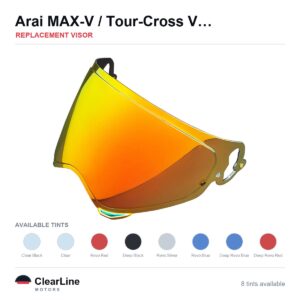
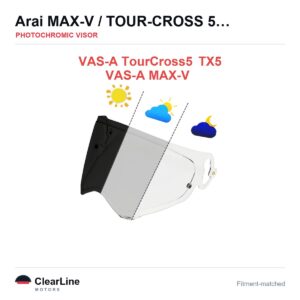
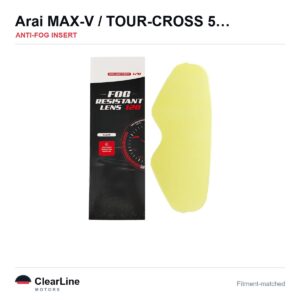
The short answer: the Tour-X5 and the XD-5 are the same helmet, so they take the same visor. Tour-X5 is the European and UK name, XD-5 is the North American name, Tour-Cross V is the Japanese name, and TX5 is a common shorthand for the Tour-X5. A visor made for any one of those four names fits the other three.
- Same helmet: Tour-X5, XD-5, Tour-Cross V and TX5 are regional names for one model.
- Same visor: one replacement visor (shield) fits all four.
- Not the same: the older Tour-X4 / XD-4 and Tour-X3 / XD-3 are earlier generations.
- What to check: the model name on the label inside your helmet, not the shape of the old visor.
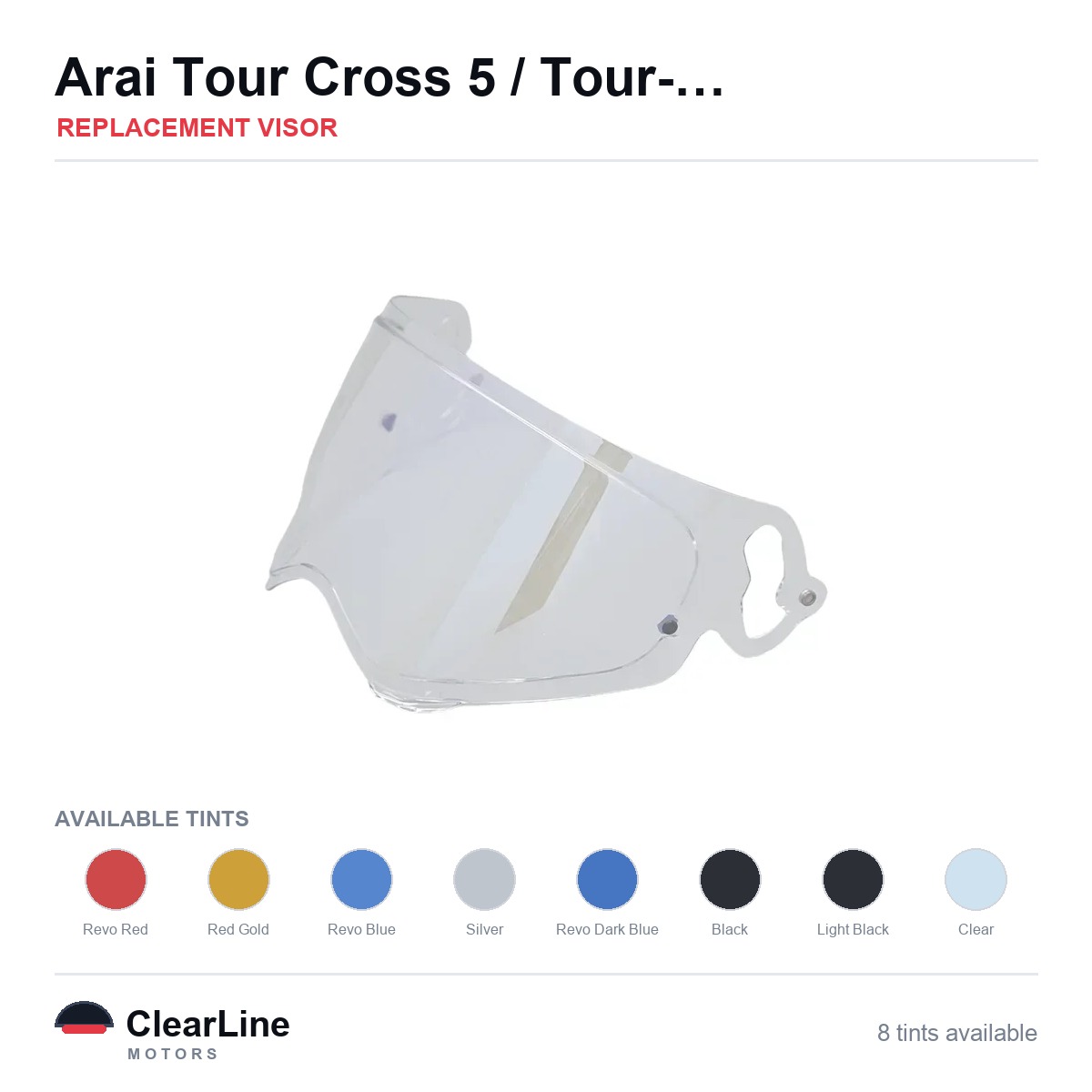
This guide explains where the names come from, how to confirm which helmet you own, and how to choose a clear, photochromic or tinted visor and an anti-fog insert for it. It also covers the neighbouring Arai models that are easy to mix up with it.
Arai Tour-X5 vs XD-5 visor: why there are two names
Arai, like several helmet makers, badges the same model differently depending on where it is sold. On its North American site, Arai lists the XD-5 as its dual-sport helmet, under the line “The Ultimate Adventure Touring Helmet”. In Europe the same helmet appears in the Arai Europe collection as the Tour-X5.
In Japan it is sold as the Tour-Cross V, which some sellers write as Tour-Cross 5. Riders and shops then shorten Tour-X5 to TX5, which adds a fourth name to the mix.
None of these names describes a different shell or a different visor mount. They describe the market. That is why the comparison in the search box has no winner: you are comparing a helmet with itself.
The four names side by side
The table below sets out each name, where you will meet it, and what it means for the visor you buy.
| Name | Where you will see it | Visor it takes |
|---|---|---|
| Tour-X5 | Europe and the UK | The shared Tour-X5 / XD-5 visor |
| XD-5 | USA and Canada | The same visor |
| Tour-Cross V (Tour-Cross 5) | Japan, and imported helmets | The same visor |
| TX5 | Shorthand on forums and in listings | The same visor |
| Tour-X4 / XD-4 | The previous generation | A different visor, not covered here |
Our fitment records group the first four names as one helmet that takes one visor. Those records are built from genuine and aftermarket part listings that name the models together, and we checked them against each other before relying on them. The last row is there because it is the most common mix-up.
How to confirm which Arai helmet you own
The shape of a visor is a poor guide on its own. Arai’s adventure helmets look alike from a distance, and the peak hides most of the visor mechanism.
Instead, check these in order:
- The label inside the shell. Lift the comfort lining at the back and read the model name and size printed there.
- The manual or box. If you still have them, the model name is on both.
- The purchase record. A receipt or order email names the model as sold in that market.
- The visor itself. Some visors carry a part code on the edge, which our guide to finding a motorcycle visor part number explains.
If the label reads Tour-X5, XD-5, Tour-Cross V or TX5, everything in this guide applies to you. If it reads anything else, our guide on working out which visor fits your helmet covers the general method.
Imported and second-hand helmets
The name question matters most when a helmet has crossed a border. A rider in the UK may own a Tour-Cross V bought from Japan, or a US rider may have a Tour-X5 brought over from Europe.
Because the helmet is the same, the visor is the same too. You can search for a visor under your own market’s name and still buy the right part.
Second-hand helmets are where mistakes creep in. A seller may describe an older Tour-X4 as “the Tour-X”, or list a helmet by its graphic rather than its model. Read the inside label yourself before you order a visor, rather than trusting the listing you bought from.
Choosing a clear replacement visor
A clear visor is the everyday choice and the one to keep as a spare. Our clear replacement visors hub lists clear options across every brand we cover.
For this helmet, any visor listed for the Tour-X5, XD-5 or Tour-Cross V is a candidate. You will see aftermarket listings use labels such as MAX-V or VAS-A in their titles. Treat a label like that as a hint, and treat the model names in the listing as the thing to match.
Before you fit a new visor, compare it with the old one on the bench. The pivot holes, the latch tab and the overall size should line up, and if they do not, stop before you fit it.
Photochromic visors for the Tour-X5 and XD-5
An adventure helmet spends long days outdoors, often in changing light. That is why photochromic visors are popular on it: they darken in UV light and clear again as the light drops.
We list a photochromic visor for the Tour-X5 and XD-5, and the wider range sits on our photochromic visors page. If you are new to them, our explainer on how photochromic visors work covers why they react more slowly behind a windscreen and in the cold.
One point carries over from every tinted visor. In Great Britain a visor is only road legal if it carries the right marking, so check the marking on the individual visor before you ride on the road with it in its darker state.
Tinted visors and the UK marking rule
Smoke, iridium and mirrored visors are popular on adventure helmets, mostly for track days and off-road use. The legal position in Great Britain depends on the marking, not the colour.
The Motor Cycles (Eye Protectors) Regulations 1999 require eye protection used on the road to meet a prescribed standard, such as BS 4110, and to be “marked with an approved certification mark of an approved body”. In the UK, iridium, mirrored and dark smoke visors transmit too little light to be legal for road use, at any time of day.
We do not check the marking on individual items, so check it yourself before riding on the road. Our iridium visors page and the guide to tinted motorcycle visor law in the UK go into the detail.
Anti-fog inserts for the Tour-X5 and XD-5
Fogging is the other common reason riders shop for this helmet. An anti-fog insert is a thin second lens that sits inside the visor and traps a layer of air, so the inner surface stays warmer than the dew point.
A Pinlock-compatible insert only fits a visor that has two locating pins on its inner face. Check your visor before ordering, because a visor without pins cannot hold an insert.
We list an anti-fog insert for the Arai Tour-X5, and our page on Pinlock-compatible anti-fog inserts explains how the pin system and the sizes work.
Keeping the new visor in good condition
The UK Highway Code, rule 83 asks riders to check before each journey “that your helmet visor is clean and in good condition.” A good visor on an adventure helmet takes more abuse than most, from dust, insects and roost.
- Rinse grit off with plenty of water before you wipe, so you do not drag it across the surface.
- Use mild soap and lukewarm water with a soft cloth, and avoid solvents.
- Store the helmet with the visor slightly open so trapped moisture can escape.
- Replace the visor once scratches in your line of sight flare under headlights.
Our guide on how to clean a motorcycle helmet visor covers the method step by step.
Neighbouring Arai models that are easy to confuse
The Tour-X5 is the fifth generation of Arai’s adventure helmet, and the earlier ones are still on the road. The Tour-X4, sold as the XD-4 in North America, is the previous model. Nothing in our verified fitment records shows its visor fitting the Tour-X5, so do not buy across generations.
If you own the older helmet, our Arai Tour-X4 visor removal guide covers that model. For a wider view across the brand, see visors that fit Arai helmets, which shows which families share a visor and which do not.
Arai’s road helmets, such as the Corsair-X or RX-7V, use their own visors. A road-helmet visor listing is not evidence of fit on the Tour-X5, however similar the name of the shield system sounds.
Visors and inserts mentioned in this guide
- Arai Tour-Cross V / Tour-X5 / XD-5 Replacement Visor — Iridium, Smoke, Clear Tints
- Photochromic visor for the Arai Tour-X5 and XD-5
- See the Arai Tour-X5 Anti-Fog Insert
- Visors listed for the Arai Tour-X5
- Replacement visors for the Arai XD-5
- Visors listed for the Arai Tour-Cross V
- Every visor we list for Arai helmets
- Find your visor with the visor finder
ClearLine is not affiliated with Arai. Our visors are aftermarket parts described by the helmets they fit. This guide was written by the ClearLine team.
Frequently asked questions
Is the Arai Tour-X5 the same helmet as the XD-5?
Yes. Tour-X5 is the name used in Europe and the UK, and XD-5 is the name used in North America. In Japan the same helmet is sold as the Tour-Cross V.
Will an XD-5 visor fit my Tour-X5?
Yes. Because the two names describe one helmet, a visor listed for the XD-5 fits the Tour-X5, and the reverse is also true. Check the model label inside your helmet first to confirm it is the fifth-generation model.
Does a Tour-X4 visor fit the Tour-X5?
Do not assume it does. The Tour-X4 (XD-4) is the previous generation, and our verified fitment records do not show its visor fitting the Tour-X5. Buy a visor listed for the Tour-X5, XD-5 or Tour-Cross V.
What does TX5 mean on a visor listing?
TX5 is shorthand for the Tour-X5. A listing that names the TX5 is describing the same helmet, so the visor is the same part.
Can I fit an anti-fog insert to the Tour-X5 visor?
Only if your visor has the two locating pins on its inner face. If it does, a Pinlock-compatible insert sized for the Tour-X5 clips between them.