
Shoei X-SPR Pro visor fitment is one of those questions that looks simple and then turns into an afternoon of cross-referencing. The helmet is sold under more than one name depending on where you bought it, retail listings bundle half a dozen model names onto a single visor, and the shield code moulded into the part is the only thing that never lies. This guide sorts out which names genuinely share the X-SPR Pro’s visor, which ones only look like they should, and how to confirm your own helmet before you spend anything.
Aftermarket visors for the Shoei X-SPR Pro


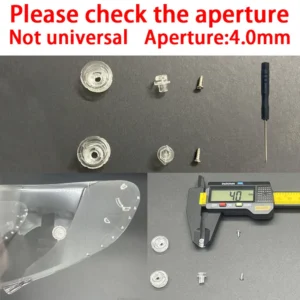
Which visor fits the Shoei X-SPR Pro? Match the shield code moulded into your old visor to the product page before you order.
Free 30-day returns for any reason: full refund, and we refund your return postage.
The short answer:
- The Shoei X-SPR Pro’s face shield is the CWR-F2R family.
- The X-SPR Pro, the X-Fifteen and the X-15 are regional and shorthand names for the same flagship race helmet, so a visor matched to one fits the others.
- The NXR2, RF-1400 and Z-8 are a separate verified group on the CWR-F2 shield. We do not make a co-fitment claim across the two families.
- If a listing names several helmets at once, treat that as a supplier fitment aid, not proof that the helmets are identical. Check the code on your old visor.
Shoei X-SPR Pro visor fitment starts with the shield code, not the helmet name
Helmet manufacturers replace shells more often than they replace visor mechanisms. That is why a shield code tells you more about interchangeability than a model name does. Two helmets with completely different shells can take the same visor if they share a base plate, and two helmets with almost the same name can take different visors if a generation change moved the pivot.
The X-SPR Pro sits on the CWR-F2R shield. Shoei sells that shield in two closely related variants for this platform: the CWR-F2R is the race-oriented version with tear-off posts, and the CWR-F2 is the anti-fog-pin version. Both use the same mount on this helmet, which is why you will see either code quoted for it.
The practical consequence is worth stating plainly. When you shop for a replacement, the question to answer is not “is this visor for a Shoei?” but “is this visor matched to the CWR-F2R platform?” Everything else in this guide is a way of getting to that answer without guessing.
Which Shoei model names share the X-SPR Pro’s visor
The X-SPR Pro is Shoei’s current FIM-homologated race helmet, the successor to the X-Fourteen. It reached different markets under different names, which is the single biggest source of confusion in this part of the catalogue.
X-SPR Pro is the European and UK name. X-Fifteen is the name used in the United States and Japan. X-15 is simply shorthand for X-Fifteen, and retailers use the two interchangeably for one part. These are not three helmets that happen to be compatible; they are one helmet with three labels, which is why a visor matched to any of them fits all of them.
| Model name | Where it is sold under that name | Shield family we verify |
|---|---|---|
| Shoei X-SPR Pro | Europe and the UK | CWR-F2R |
| Shoei X-Fifteen | United States and Japan | CWR-F2R |
| Shoei X-15 | Shorthand for X-Fifteen | CWR-F2R |
| Shoei NXR2 | Europe and the UK | CWR-F2 — separate group |
| Shoei RF-1400 | United States | CWR-F2 — separate group |
| Shoei Z-8 | Japan | CWR-F2 — separate group |
Read that table as two blocks rather than six rows. The top three are one helmet. The bottom three are a different helmet, also sold under three regional names, and they have their own verified shield family.
The names that look related but sit on a different shield family
The NXR2, RF-1400 and Z-8 are the road-going equivalents of the race helmet above. They are the same helmet as each other under European, American and Japanese names, and they take the CWR-F2 shield as a group. That much we verify.
What we deliberately do not tell you is that a visor from that group drops onto an X-SPR Pro. The two families are recorded separately in our fitment data, and where a claim spans them we treat it as unverified rather than guessing in the customer’s favour. A wrong-fit visor on a race helmet is not a returns problem, it is a visibility problem at speed.
You will still see retail listings, ours included, that name helmets from both families on a single product. That reflects which models a supplier has matched to a part. It is a shopping aid and it is not a statement that every helmet named is the same helmet, so use the category page for your exact model rather than reading a bundled title as a compatibility chart.
How to confirm your own helmet before you order
Three checks settle it, and none of them costs anything. Do them in this order, because each one is harder to get wrong than the last.
Start with the label. The model name is printed inside the chin bar, under the lining or on the strap label. A helmet bought second-hand in another market may carry a name you have never seen on a UK shelf, and that label is what resolves it.
Then read the visor itself. Shoei moulds the shield code into the plastic, usually near the edge or in the corner by the pivot. If your old visor reads CWR-F2R or CWR-F2, you are on the platform this guide covers. Our guide to reading the part number moulded into your old visor walks through where to look on other makes.
Finally, match the base plate. Hold the old visor against the new one and compare the pivot cut-outs and the latch hook rather than the overall curve. Two visors can look identical across a room and differ by the few millimetres that matter. If you would rather work from the helmet rather than the part, the visor finder goes from model name to matched visors directly.
Tints, coatings and what the law actually tests
Fitment tells you whether a visor will clip on. It does not tell you whether you may ride behind it on a UK road. Those are two separate questions, and riders lose money by answering only the first one.
The legal test in Great Britain is the marking on the individual eye protector, not the tint name in a product listing. The Motor Cycles (Eye Protectors) Regulations 1999 prescribe grades from British Standard BS 4110 and require a protector to be “marked with an approved certification mark of an approved body”. BS 4110 is the visor standard; BS 6658 is a helmet standard, and the two are not interchangeable.
Iridium, mirrored and dark-smoke visors are never road legal in Great Britain, day or night. They transmit too little light to be legal for road use, so treat them as track or off-road items. We do not verify the markings on individual items, so we make no approval claim for any visor we sell.
For road riding on a helmet you also use in daylight, a clear replacement visor plus a separate tinted visor for track days is the arrangement that causes the fewest arguments. A photochromic visor is the other route, and it changes the maths because one visor covers both conditions.
Anti-fog inserts and photochromic options for this platform
The X-SPR Pro’s visor is pin-ready, so a pin-style insert is the standard answer to fogging on this helmet. The insert seals against the inside face of the visor and creates a small air gap, which keeps the inner surface above the temperature at which your breath condenses.
Two things trip people up here. The insert is matched to the visor, not to the helmet, so changing to a different shield can mean changing the insert. And an insert only works if the visor is fully closed on its detent, which is also when a poorly matched visor gives itself away.
If you want one visor that covers dawn starts and midday sun, the photochromic visor matched to the Shoei X-SPR Pro darkens in daylight and clears again indoors. It reacts to ultraviolet light rather than brightness, so it stays clear behind a car windscreen. Our wider range of Pinlock-compatible anti-fog inserts covers the other Shoei platforms if you run more than one helmet.
Fitting the visor without damaging the base plate
The X-SPR Pro uses a quick-release mechanism, and it rewards patience rather than force. Open the visor fully to its highest detent first; the release will not disengage cleanly at any other position.
Work one side at a time and support the visor as the second side comes free, because a visor that drops onto a hard floor picks up exactly the kind of edge damage that later becomes a crack. When you refit, listen for the click on both sides and then cycle the visor two or three times before you ride.
A visor that seals on one side and not the other is almost always a base plate that has not seated, not a wrong part. The Highway Code is blunt about why this matters: rule 83 says “Before each journey check that your helmet visor is clean and in good condition”, and rule 84 notes that “Scratched or poorly fitting eye protectors can limit your view when riding”, particularly in bright sunshine and after dark.
How this compares with the other shield families that fit Shoei helmets
If you have arrived here from a different Shoei, the same method applies with a different code. The CWR-1 family covers the NXR, RF-1200, Z-7 and the X-Fourteen generation, and we have set out where the boundaries fall in our guide to the CWR-1 and CWR-F shield families.
The touring and flip-front helmets are a separate story again, because the internal sun visor changes the mechanism. Our notes on Neotec visor compatibility cover that side. For the general principle behind all of this, whether motorcycle visors are interchangeable between models is the broader answer.
Everything we list for this helmet sits under visors that fit Shoei helmets, organised by model so you never have to interpret a bundled title. ClearLine is an independent aftermarket supplier and is not affiliated with Shoei; model names appear here only to describe what a part fits. UK delivery is free.
Visors and inserts mentioned in this guide
- Shoei NXR2 / RF-1400 / X-Fifteen / X-SPR Pro & more Anti-Fog Insert — Stops Visor Fogging
- See the photochromic visor for the Shoei X-SPR Pro
- Replacement visors for the Shoei X-SPR Pro
- X-Fifteen visor listings
Frequently asked questions
Does an RF-1400 visor fit a Shoei X-SPR Pro?
We do not claim that it does. The RF-1400 belongs to a verified group with the NXR2 and the Z-8 on the CWR-F2 shield, while the X-SPR Pro is grouped with the X-Fifteen and X-15 on the CWR-F2R. Any fitment that spans those two families is recorded as unverified in our data, so buy against your own model rather than assuming the platforms interchange.
What shield does the Shoei X-SPR Pro use?
The CWR-F2R family. Shoei offers a tear-off-ready version and an anti-fog-pin version of that shield for this helmet, and both share the same mount, so either code points you at the right platform.
Is the X-Fifteen the same helmet as the X-SPR Pro?
Yes. X-SPR Pro is the European and UK name and X-Fifteen is the name used in the United States and Japan, with X-15 as the common shorthand. A visor matched to one of those names fits the others.
Can I fit a photochromic visor to a Shoei X-SPR Pro?
Yes, provided the visor is matched to the CWR-F2R platform. A photochromic visor reacts to ultraviolet light, so it darkens outdoors and clears again inside, which removes the need to carry a second visor for changing conditions.
How do I tell which Shoei I actually have?
Check the label inside the chin bar, under the lining or on the strap, then read the code moulded into your existing visor. Between those two you can identify the platform without measuring anything, which matters most on helmets bought in another market.
Written by the ClearLineMoto team — more about who we are on our about page.