
Fog on the inside of a visor is not dirt, and it does not need to be wiped. Knowing how to demist a motorcycle visor properly matters, because the first instinct — a gloved hand dragged across the inside — is the most reliable way to scratch a visor permanently. A scratch scatters light at night and in low sun, and it never polishes out.
The short answer: stop somewhere safe, open the visor and the vents, and let moving air clear the condensation instead of rubbing at it. If you cannot stop, crack the visor to its first detent and let airflow do the same job more slowly. Wipe the inside only once the visor is off the helmet and properly wet.
- Fog is condensation, so airflow and temperature clear it — friction does not.
- A dry wipe with a glove, sleeve or tissue is what puts fine scratches in the soft inner surface.
- The first detent on the visor is the roadside tool most riders forget they have.
- An anti-fog insert changes the rules: never wipe one dry, and never use solvent on it.
- Repeated fogging is a ventilation or moisture problem, not a cleaning problem.
Why a visor fogs, and why fog is not dirt
Warm, humid air from your breath meets the cold inner face of the visor and drops below its dew point. The water leaves the air and lands on the plastic as a field of tiny separate droplets. Each droplet is a small lens, and thousands of them scatter light in every direction, which is what turns the road ahead into a grey blur.
That matters for how you clear it. The visor is not covered in a film of grime that needs lifting off; it is covered in water that will leave on its own once the surface warms or the air above it moves. Anti-fog treatments work by changing the shape of that water rather than repelling it.
Published work on antifogging coatings describes the mechanism directly: with a hydrophilic coating, condensed water spreads into a pseudo-film shape immediately to avoid fogging instead of beading into droplets. A continuous film of water is optically almost invisible. The same volume of water as separate beads is what you cannot see through.
The roadside reflexes that scratch a visor
Almost every scratched visor in the country was damaged by a rider trying to help. The inner surface of a visor is softer than the outer face, and on many visors it carries an anti-fog coating that is softer still. Dragging anything dry across it grinds whatever dust is already sitting there into the plastic.
The four habits that do the damage are a gloved thumb, a jacket sleeve, a paper tissue and a supermarket receipt. Leather and textile gloves hold road grit in the seams. Paper is made of wood fibre and is far harder than it feels against skin.
The damage is cumulative and invisible at first. You will not see the marks on a bright day, and then one night you will meet oncoming headlights and find a starburst across your field of view. At that point the only honest fix is replacement, though it is worth reading about what can and cannot be done about visor scratches before you decide. Avoiding the other common visor cleaning mistakes keeps a visor usable far longer than any polish will.
How to demist a motorcycle visor at the roadside
This is the sequence when you have stopped and the visor has misted over completely. It takes under a minute and needs nothing you are not already carrying.
- Get somewhere safe first. Off the carriageway, engine off or idling, feet down.
- Open the visor fully. The single biggest temperature difference is between the trapped air inside the helmet and the outside air, and opening the visor removes it.
- Open every vent you have. Chin vent, brow vents and top vents all feed air across the inner face of the visor.
- Lift the helmet off, or at least lift the chin bar away from your face. Your breath is the moisture source, so step out of the loop.
- Wait, and do not touch the inside. Thirty seconds of moving air clears more fog than any wipe, and it clears it without contact.
- Dry the chin curtain and the neck roll if they are soaked. Wet fabric keeps feeding humid air back in as soon as you set off.
If the fog is on the outside rather than the inside, the sequence is different and the cause is different too, which is covered in the guide to condensation forming on the outside of a visor. In freezing conditions what looks like stubborn fog may already have become a thin layer of ice on the inside of the visor, which must be melted rather than scraped.
Demisting on the move, without stopping
Sometimes stopping is the wrong call, and you need to see now. The tool is the visor’s own detent positions rather than anything you carry.
Crack the visor to its first detent, the small city-position notch most visors have just off closed. That gap admits a thin, fast stream of air along the inside face, and at anything above walking pace it clears a misted visor within a few seconds. Riding with the visor cracked also stops the fog returning while you get to somewhere sensible to stop.
Two things help while you do it. Point your chin down slightly so your breath goes into the chin bar rather than straight up the visor, and breathe through your nose if you can. Rain makes the whole problem worse in ways that are worth understanding separately, since fogging in the rain combines a cold visor with air that is already saturated.
If your visor has an anti-fog insert fitted
An insert changes what you are allowed to do. The insert sits a fraction of a millimetre off the visor, sealed at the edge, and the trapped air between the two layers is what keeps the inner surface above the dew point. That inner layer is coated, soft and easily marked.
Never wipe an insert dry, never use alcohol, screen wash or household cleaner on it, and never dig at the edge seal with a fingernail. If an insert is misting up on its face, the seal has usually been compromised or the insert has been fitted with too little tension. The full method for looking after one is in the guide to cleaning an anti-fog insert without damaging the coating.
If you do not run an insert and you fog up regularly, that is the fix worth making. A Pinlock-compatible insert addresses the cause rather than the symptom, and it keeps working in conditions where sprays have already given up — there is a separate explanation of why an anti-fog spray stops working after a few rides, and of which DIY anti-fog remedies help and which strip the coating.
Fixing the cause once you are home
Clearing fog at the roadside is first aid. If it happens on every cold morning, something in the system is holding moisture that should not be there.
Work through the usual sources in order. Wash and fully dry the chin curtain, breath guard and neck roll, because soaked foam is a reservoir that keeps evaporating into the helmet. Check that the vents actually open, since dried road film and insect debris jam vent sliders shut more often than riders expect.
Then clean the visor properly, which means off the helmet and under plenty of lukewarm water before any cloth touches it. The water floats the grit off; the cloth only ever finishes the job. The whole preventive picture, including ventilation, fit and insert choice, is set out in the main guide on how to stop a helmet visor fogging in the first place.
Why visor condition is a safety matter, not just comfort
The Highway Code treats visor condition as a pre-ride check rather than an afterthought. Rule 83 tells riders to check that your helmet visor is clean and in good condition before each journey. Rule 84 adds that scratched or poorly fitting eye protectors can limit your view, particularly in bright sunshine and the hours of darkness.
That is the practical argument against the dry wipe stated in official terms. Every scratch you add is a permanent reduction in what you can see when the light is worst, and it is exactly the condition the Code warns about.
There is a legal dimension to eye protection as well, and it is often misunderstood. Under The Motor Cycles (Eye Protectors) Regulations 1999, an eye protector sold for motorcycle use in Great Britain must be marked with an approved certification mark of an approved body. The marking on the individual item is the test, not the colour of the visor or the name a tint is sold under.
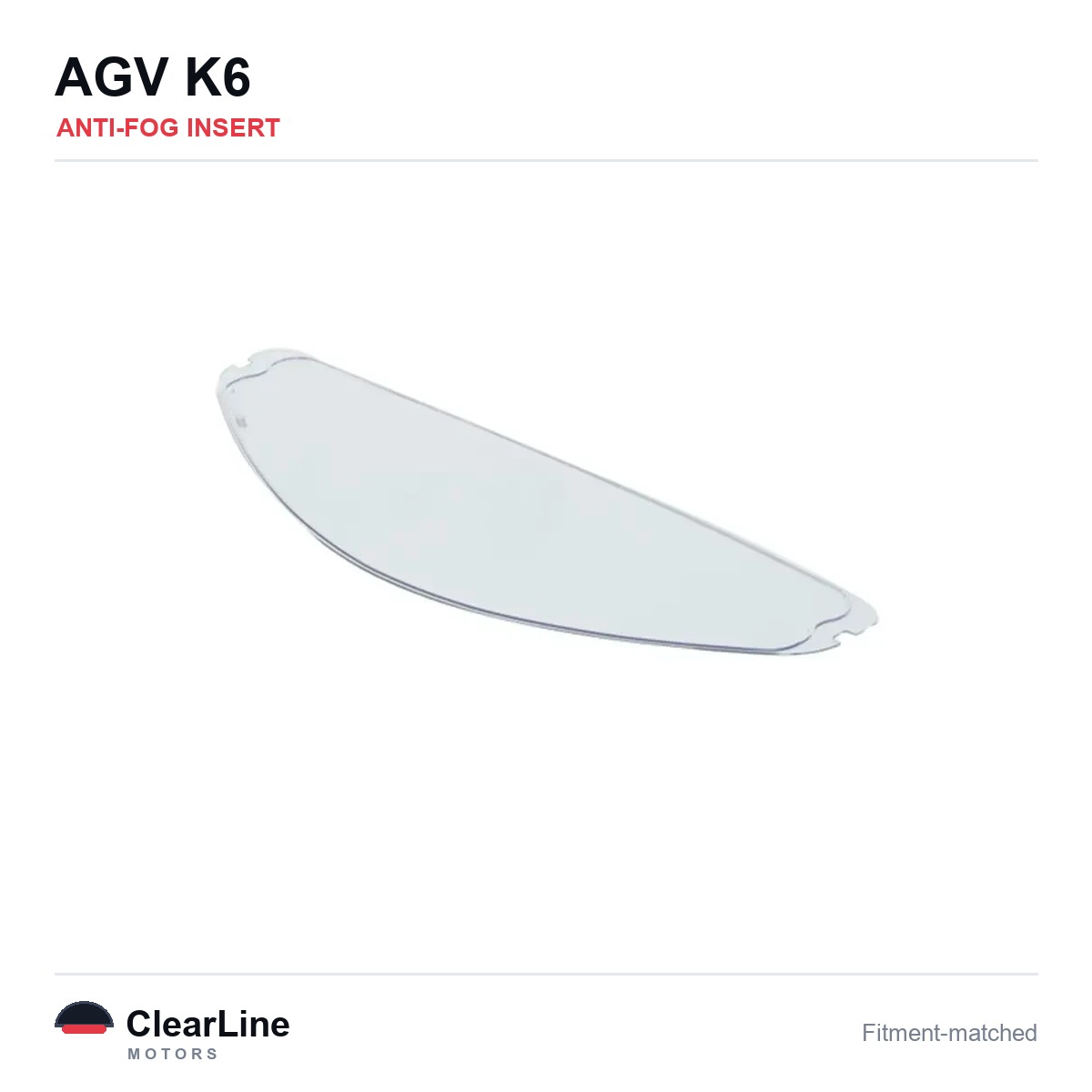
Visors and inserts mentioned in this guide
- See the AGV K6 Replacement Visor
- See the AGV K6 Anti-Fog Insert
- AGV K3 Anti-Fog Insert — Stops Visor Fogging
Frequently asked questions
Does breathing through your nose really reduce visor fogging?
It helps, and it costs nothing to try. Nasal breathing sends a slower, cooler, better-directed stream of air downwards into the chin bar rather than upwards across the visor. It will not fix a helmet with blocked vents or a soaked neck roll, but combined with an open chin vent it noticeably delays the point at which fog forms while you are stationary at a junction.
Can I use my glove to demist a visor in an emergency?
Treat it as a genuine last resort, and accept that you are trading visibility now for permanent marks later. If you have no alternative, use the smooth back of the glove rather than the palm or the seams, use the lightest pressure that works, and move in one direction rather than scrubbing. Then clean the visor properly at the next stop, because the grit you just dragged across it is still sitting there.
Why does my visor fog up more at traffic lights than at speed?
Airflow is doing the work at speed, and it stops when you do. Standing still removes the ventilation that was clearing your breath, while the visor stays cold and your breathing rate stays up. Cracking the visor open as you slow for a junction, rather than after it has already misted, is the habit that solves this one.
Will a new clear visor stop the fogging on its own?
Not by itself, though it helps if the old one is scratched or its coating has worn away. Fogging is driven by moisture and temperature, so a fresh visor with the same ventilation and the same wet neck roll will still mist up. A fresh surface does hold an anti-fog treatment or an insert far better than a worn one, which is why replacement and prevention usually go together.
Keeping it clear for good
The roadside technique is worth having, but it is the fallback. Riders who stop thinking about fog are almost always the ones running a properly sealed insert in a helmet whose vents work and whose linings are dry.
If you want to stop demisting altogether, fit an insert that matches your visor: the range of Pinlock-compatible anti-fog inserts is listed by helmet model, and there are visors and inserts that fit AGV helmets alongside every other marque we cover. A fitment example is the anti-fog insert that fits the AGV K6. Free UK delivery applies across the range, and if you are unsure which visor your helmet takes, the visor finder narrows it down by model. A spare clear visor in the top box is the other thing that turns a ruined ride into a five-minute swap.