
A photochromic visor costs more than a plain shield, so when it starts to look dull or patchy the worry is that the light-reactive layer itself is fading. Most of the time it is not. This guide explains how to clean a photochromic visor (shield) safely, what actually causes the dull look, and how to tell dirt and residue apart from real wear.
The short answer: clean a photochromic visor the same gentle way you would clean any good visor, only more strictly. Soak the dirt off with lukewarm water and a drop of mild soap, wipe with a clean wet microfibre cloth, rinse, and blot dry. Never use solvents, glass cleaner, abrasive pastes or hot water, because those attack the hard coat and any surface layer the light-reactive dye sits in.
- Most “dull tint” is a film of residue or fine scratching in the hard coat, not dye that has died.
- Let water do the work; rubbing a dry or gritty visor is what causes lasting haze.
- After cleaning, check the shield in sunlight: if it darkens and clears evenly, the photochromic layer is fine.
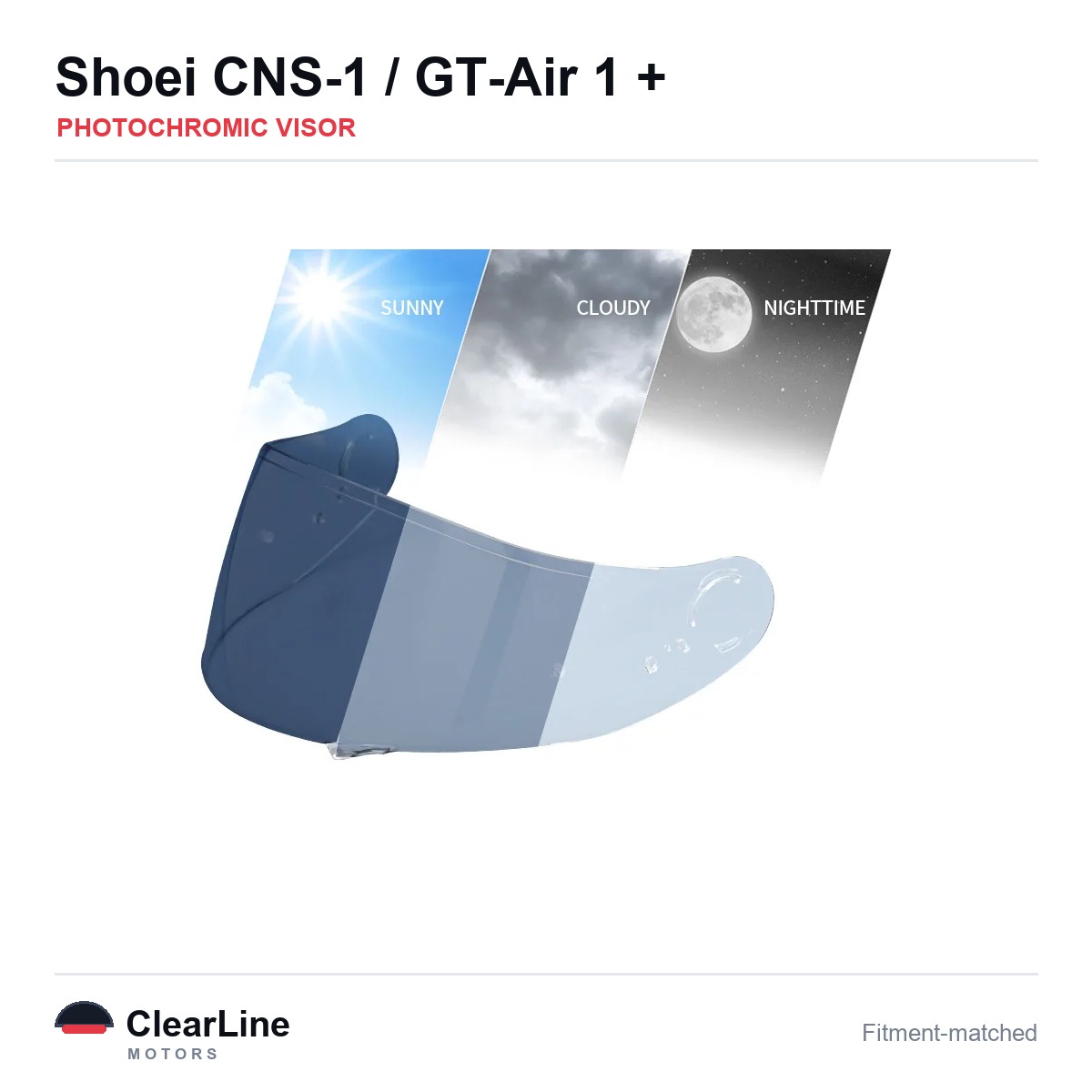
Why a photochromic visor needs more care than a clear one
A photochromic visor darkens because light-reactive dye molecules change shape when ultraviolet light reaches them, then change back when the UV fades. Our explainer on how photochromic visors work covers the chemistry. What matters for cleaning is where that dye lives.
Depending on the maker, the dye may be blended into the polycarbonate, carried in a layer bonded to the shield, or applied as a surface coating. On top of that, most visors carry a thin scratch-resistant hard coat on the outside, and some have an anti-fog treatment on the inside. You usually cannot tell from looking which construction you have.
So the safe assumption is that the outer surface is a delicate, layered finish. A cleaner that only marks a cheap clear shield can cloud a coating, soften a layer, or leave a film that scatters light. Treat every photochromic visor as if its active layer were on the surface, and you will never damage one that is not.
What you need before you start
The kit is short, and almost all of it is already in the house. What matters is that every item is clean, because grit on a cloth does more harm than any cleaner.
- Lukewarm water: warm enough to soften dried insects, never hot.
- Mild, unscented soap: a drop of baby shampoo or plain washing-up liquid without lotions or abrasives.
- Two clean microfibre cloths: one for washing, one dry and folded for blotting.
- A soft damp cloth or kitchen towel to lay over the visor: this is what softens stubborn bugs.
- A clear work area: somewhere you can lay the shield down on a soft towel, not a hard bench.
Our guide to what to clean a motorcycle visor with goes through cleaners in more depth, including the ones that look harmless and are not.
How to clean a photochromic visor, step by step
You can clean the shield on the helmet, but taking it off gives you better access to the edges and the seal area. If you do remove it, our guide to removing and refitting a helmet visor shows how to do it without stressing the mechanism.
Step 1: Rinse loose grit away first
Run lukewarm water over the outside of the visor, or pour it over gently from a jug. The goal is to float off dust and road grit before anything touches the surface. Grit dragged across a coating is the single most common cause of fine haze.
Step 2: Soak dried insects and road film
Lay a soaking wet cloth or a sheet of wet kitchen towel over the dirty area and leave it for a few minutes. Dried insects soften and lift instead of needing to be scrubbed. Our guide to getting dried-on flies off a visor has more on stubborn cases.
Step 3: Wash with mild soap and a wet microfibre cloth
Add a drop of mild soap to the water and wipe with a wet microfibre cloth in straight, light strokes. Let the cloth glide; do not press. Turn the cloth to a clean face often so you are not moving dirt from one side of the visor to the other.
Step 4: Rinse off every trace of soap
Rinse thoroughly with clean lukewarm water. Soap left behind dries into a thin film that looks exactly like a dull or uneven tint. A good rinse is the step people skip, and it is behind a lot of “my photochromic visor has gone cloudy” worries.
Step 5: Blot dry, do not rub
Pat the visor dry with the second, clean microfibre cloth, or let it drip dry standing on its edge. Rubbing a nearly dry shield pushes any remaining particles across the coating. Our guide to drying a visor without leaving marks explains why blotting beats wiping.
Step 6: Clean the inside separately and more gently
The inside of the shield may carry an anti-fog treatment, which is softer than the outer hard coat. Use only water and a damp microfibre cloth there, with almost no pressure. If an anti-fog insert is fitted, remove it first and clean it on its own, as our guide to cleaning a pin-style anti-fog insert describes.
What to avoid on a photochromic visor
The list of things that harm a light-reactive shield is longer than the list of things that clean it. These are the ones to keep well away from it.
- Solvents and fuel: petrol, acetone, thinners, brake cleaner and similar products can craze polycarbonate and strip coatings.
- Household glass cleaners: many contain ammonia or alcohol, which can cloud coatings and dry out seals.
- Abrasive pastes and polishes: these remove material from the surface, and on a coated shield the material they remove is the coating.
- Paper towels and rough rags used dry: wood fibres and trapped grit leave swirl marks.
- Hot water, hair dryers and radiators: heat can stress the plastic and the bond between layers.
- Insect repellent and sunscreen on your hands: some of these chemicals attack plastics on contact.
Our guide to the chemicals that damage a visor goes through each family and why it causes harm.
Why a photochromic visor can look dull after cleaning
If the shield looks flat or patchy after you have cleaned it, work through the likely causes in order, cheapest first. Nearly all of them have nothing to do with the dye.
Soap or cleaner film. A thin residue scatters light and gives a milky look, especially in low sun. Rinse again with plain lukewarm water and blot dry.
Hard-water spots. In areas with hard water, droplets dry into faint mineral rings. Our guide to hard-water spots on a visor covers how to lift them without scrubbing.
Fine scratching in the hard coat. Years of wiping a dry, dusty shield leave a fine web of marks that only shows against the light. This is permanent; our guide to removing scratches from a visor explains why polishing makes it worse rather than better.
A warm visor. Photochromic dyes darken less when they are warm, so a shield that has been sitting in a hot room will look lighter for a while. Our guide to photochromic visors in hot weather explains this effect, which is normal and not a sign of damage.
How to check whether the light-reactive layer still works
The simplest test is to take the clean, dry shield outside on a bright day. Hold it in direct sunlight for a minute or two and watch it darken, then bring it indoors and watch it clear.
Look for two things. First, the tint should change across the whole shield, not in patches; uneven darkening that stays the same after a thorough clean points to a damaged layer. Second, compare it against how it behaved when new, allowing for the temperature on the day, because cold slows the clearing and heat reduces the darkening.
Light-reactive dyes do lose some of their response over a long service life, which is a separate issue from cleaning. Our guide to how long a photochromic visor lasts covers the signs of a shield reaching the end of its useful life.
Cleaning a photochromic visor on the road
On a ride you rarely have a tap and two clean cloths. The rule then is to do less, not to improvise with whatever is to hand.
A small bottle of plain water and a microfibre cloth in a sealed bag will clear most bugs at a fuel stop: wet the visor, wait a minute, then wipe gently. Never use the forecourt squeegee or the blue paper roll, which carry grit and harsh cleaner. Our guide to cleaning a visor at a fuel stop with no water or kit has more options for when you are caught out.
The Highway Code is clear that this matters. Rule 83 asks riders, before each journey, to “check that your helmet visor is clean and in good condition”, so a quick, careful clean on a long day is part of riding, not just looking after the shield.
Storing a photochromic visor between rides
How the shield is stored affects how often it needs cleaning, and how well its surface lasts. A visor that rattles around a garage shelf picks up dust and fine scratches between every ride.
Keep a spare photochromic shield in a soft microfibre bag, away from fuel, solvents and direct heat. If the visor stays on the helmet, stand the helmet somewhere it will not be knocked, and avoid hanging it from a mirror, where the shield can rub. Our guides to storing a spare visor and storing a helmet through the winter cover longer breaks.
A photochromic shield also works best with a clear inner surface, so an anti-fog insert is worth considering. Whether a particular light-reactive shield is ready for one varies by product; our guide to using an insert with a photochromic visor explains what to check, and we stock anti-fog inserts for Pinlock-ready visors.
Photochromic visors and the law in Great Britain
Cleaning does not change the legal position of a visor, but the question comes up often enough to be clear about it. In Great Britain the legal test for a visor is the marking on the individual shield, not its colour and not the fact that it is photochromic.
The Motor Cycles (Eye Protectors) Regulations 1999 prescribe eye protectors that meet a grade of British Standard BS 4110, which is the visor standard; BS 6658 is a helmet standard. A visor is only road legal in Great Britain if it carries the required marking, and ClearLine does not verify the markings on individual items, so we make no legality claim about any visor we sell.
Separately, Rule 94 of the Highway Code says that at night or in poor visibility you should “not use tinted glasses, lenses or visors if they restrict your vision”. Our explainer on tinted motorcycle visors and the law in Great Britain covers the wider rules; this section describes the position in Great Britain only.
When cleaning is no longer enough
A careful clean fixes residue, spots and road film. It cannot fix deep scratches, crazing, peeling coatings or a light-reactive layer that darkens in patches. When a shield shows those signs, it is time to replace it rather than keep scrubbing.
Our guide to when a visor is finished sets out the warning signs. Visors fit by shield mechanism, not by brand, so the quickest way to find a replacement is the motorcycle visor finder, which matches your helmet model to the shields made for it.
You can also browse every photochromic motorcycle visor we stock. Owners of the Shoei Neotec can start from visors for the Shoei Neotec, and HJC i71 owners from visors for the HJC i71, including the HJC F71 / i71 Photochromic Visor. ClearLine sells aftermarket visors and is not affiliated with or authorised by any helmet manufacturer; model names describe fitment only.
This guide was written by the ClearLine team. Shipping is free.
Visors and inserts mentioned in this guide
- Shoei GT-Air 1 / GT-Air II / Neotec Photochromic Visor
- photochromic visor for the HJC F71 and i71
- See the Shoei Neotec range
- See the anti-fog inserts
Photochromic visor cleaning questions riders ask
What is the best way to clean a photochromic motorcycle helmet visor?
Soak off the dirt with lukewarm water, wash with a drop of mild soap on a wet microfibre cloth, rinse thoroughly and blot dry. Use light pressure throughout and keep the cloth clean. Avoid solvents, glass cleaners, abrasives and hot water.
Can cleaning damage the photochromic layer?
Gentle cleaning with water and mild soap will not. Harsh chemicals, abrasive polishes and heat can damage the hard coat and any surface layer the dye sits in. Treat the outer surface as delicate and the light-reactive layer is safe.
Why does my photochromic visor look cloudy after cleaning?
The usual cause is soap residue or hard-water spots, both of which rinse off. Fine scratches in the hard coat can also show as haze against the light, and those are permanent. Rinse again with plain water before assuming the worst.
Can I use glass cleaner on a photochromic visor?
No. Many household glass cleaners contain ammonia or alcohol, which can cloud coatings and dry out rubber seals. Water and a drop of mild soap are all a visor needs.
How do I know if my photochromic visor still works after cleaning?
Take the clean shield into direct sunlight and watch it darken, then bring it indoors and watch it clear. An even change across the whole shield means the layer is working. Patchy darkening that survives a thorough clean points to damage.