Short answer: it depends where you ride, and on how much light the visor lets through. Most countries don’t ban “iridium” or “mirrored” as a style — they regulate light transmission. A visor that blocks too much light fails the light-transmission requirement, whatever its finish — in Great Britain that makes it not legal for road use, day or night.
The number that actually matters: VLT
VLT (visible light transmission) is the percentage of light a visor lets through. A clear visor is typically around 80–90% VLT. A dark smoke or heavily mirrored visor can drop to 20% or less. Regulations are generally written around this figure rather than the colour or coating.
- Clear / very light tints — high VLT, generally fine day or night.
- Light smoke, light iridium — reduced light transmission; in Great Britain, not legal for road use unless the specific visor carries the required approval marking.
- Dark smoke, heavy mirror/iridium — transmit too little light to be legal for road use in Great Britain, day or night. Track and off-road only.
Why “road legal” is not a single answer
Approval marks differ by region (for example ECE marking in Europe versus DOT in the United States), and enforcement varies again at national or state level. A visor sold freely in one country may not meet another’s requirements for night riding. Rules also change. So rather than claim a blanket answer, we label our tints by intended use and ask you to confirm what applies where you ride. For the specifics that apply in Great Britain, see our guide to where the rules draw the line on tinted visors.
This is general guidance, not legal advice — check your local rules before riding with a dark or mirrored visor on the road.
The practical setup most riders land on
Riders who want a dark visor in daylight and safe vision at night usually pick one of two routes:
- Two visors — a clear one for the road and a dark or iridium one for track days and off-road riding, swapped as needed. Cheapest and most flexible.
- A photochromic visor — one visor that darkens in bright light and clears when it’s dull, so you’re not carrying a spare. Read our photochromic visors if you’d rather not swap.
Night riding
This is the one to take seriously. A dark or heavily mirrored visor at night meaningfully reduces what you can see — potholes, unlit hazards, animals. Whatever the local rule says, a dark visor at night is a bad idea. Carry a clear visor or run photochromic.
What we sell, and how we label it
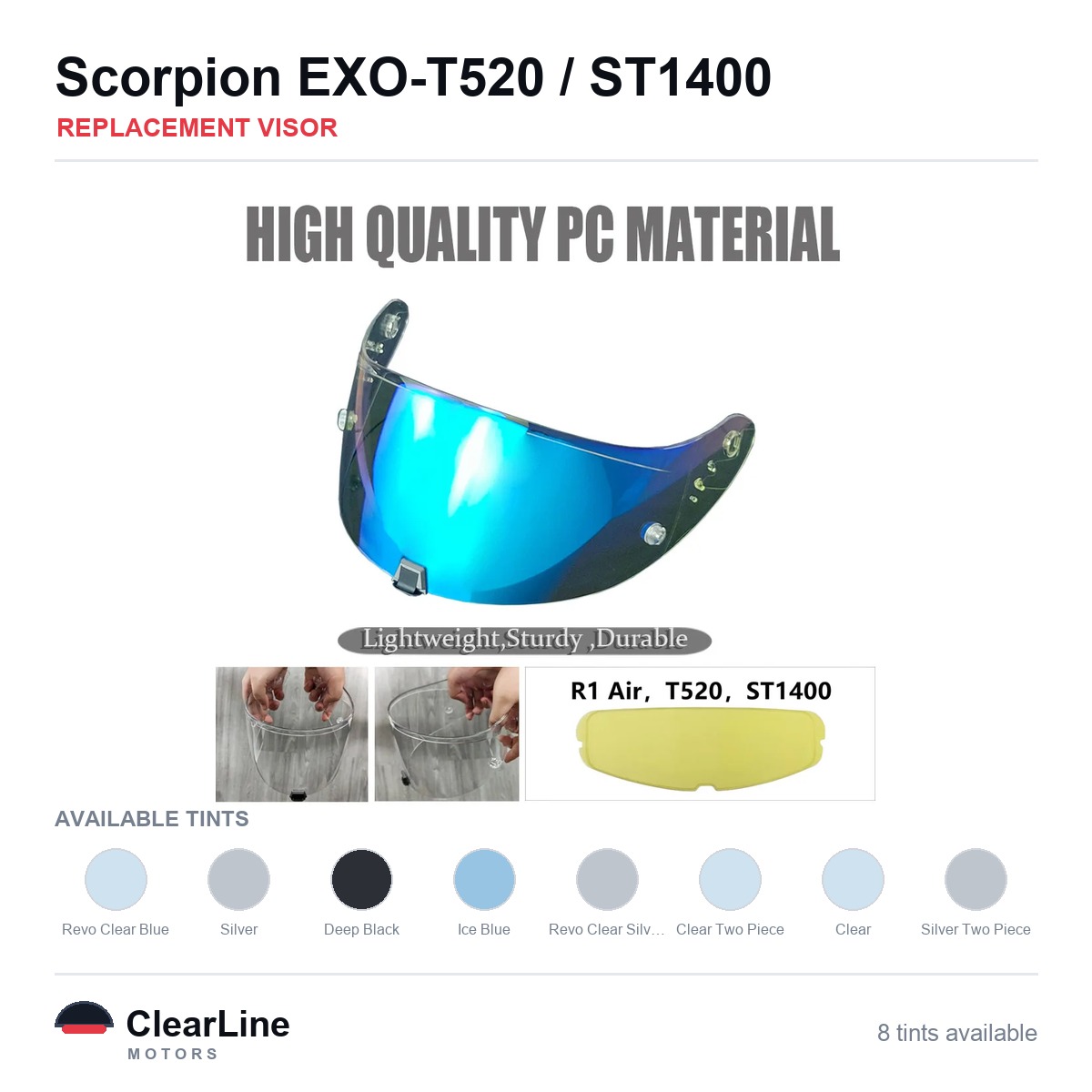
Our visors are aftermarket and unbranded — helmet brand names indicate fitment compatibility only. Because they do not carry verified approval markings, none of our visors are sold as authorised for road use. Mirrored, iridium and dark-smoke finishes transmit too little light to be legal for road use in Great Britain, day or night — they are track and off-road equipment. For road riding, use a visor carrying the approval marking required where you ride.
Find the visors that fit your exact helmet using the finder on our homepage, or browse replacement visors and anti-fog inserts.