
Knowing how to dry a motorcycle visor properly is the difference between a screen you can see through at dusk and one covered in fine scratches you only notice when headlights hit it. Washing gets the dirt off. Drying is where the damage usually happens, because that is the moment most riders reach for whatever cloth is nearest. The water is already doing half the work for you, and the wrong towel undoes all of it in one pass.
This guide covers the outside, the inside, the anti-fog insert and the seals, plus the roadside version for when you are stood in a car park with a wet screen and no kit at all.
The short answer
- Let gravity do most of it. Hold the visor on its edge and let the bulk of the water run off before any cloth touches it.
- Blot, never wipe. Press a clean microfibre cloth flat onto the surface and lift it away. Dragging it is what drags grit.
- Use two cloths. One damp-clean cloth for the wash, one bone-dry cloth kept only for drying.
- Dry the outside and inside differently. The inside often carries an anti-fog coating that must never be scrubbed.
- Never use compressed air, a hairdryer or a radiator. Heat warps the screen and distorts the optics permanently.
Why drying causes more damage than washing
A visor is polycarbonate with a thin hard-coat on top. That coat resists scuffing, but it is measured in microns, and a single grain of road grit pressed into it will cut a groove that no polish will remove. During a wash the water floats that grit away from the surface. During drying there is no water left to float anything.
So the risk profile inverts. A wash with plenty of water is fairly forgiving; a dry pass with a gritty cloth is not. That is why the whole method below is built around removing water without moving anything sideways across the screen.
Scratches matter more than they look. The Highway Code’s Rule 84 warns that “Scratched or poorly fitting eye protectors can limit your view when riding”, and the effect is worst exactly when you need vision most, in low sun and after dark. A scratch you cannot see at noon becomes a starburst at night.
What you need before you start
The kit list is short and none of it is specialist. What matters is that the drying cloth is genuinely clean, because a cloth that has been used on a chain, a wheel or a garage floor is a scratch delivery system.
- Two microfibre cloths, washed without fabric softener. Softener leaves a residue that smears.
- Clean lukewarm water for the final rinse, ideally not straight from a hard-water tap.
- A soft towel or a clean tea towel to rest the visor on while it drains.
- Cotton buds for the vent slots and the edge channel, where water hides.
Keep the drying cloth in a sealed bag or a drawer, used for nothing else. It is the single cheapest piece of protection in the whole routine.
How to dry a motorcycle visor, step by step
- Rinse last with clean water. Any detergent left on the surface will dry into a film that looks like haze.
- Shake off the loose water. Hold the visor by its edges and give it two firm downward flicks away from you.
- Stand it on edge to drain. Lean it against something soft for a minute or two. Most of the water leaves on its own.
- Blot the outside. Lay the dry cloth flat, press gently, lift straight up. Work across the screen in overlapping presses.
- Blot the inside. Same motion, lighter pressure, and treat any anti-fog coating as if it were a camera lens.
- Dry the edges and vents. Run a cotton bud around the rim and through any breather slots.
- Leave it to air off. Ten minutes propped on a clean surface clears the last traces without any contact at all.
If you only remember one thing, remember step four. Blotting removes water; wiping relocates grit.
Drying the outside and the inside are different jobs
The outside is hard-coated and takes light contact reasonably well. The inside is softer, often carries a factory anti-fog treatment, and is the surface riders ruin most often. Manufacturers treat that coating as a consumable for good reason.
On the inside, never use circular polishing motions and never apply a cleaner that is not specifically intended for visors. Our guide to the chemicals that damage a motorcycle visor covers what strips those coatings, and several of the culprits are ordinary household bottles.
If the inside is badly hazed rather than simply wet, drying will not fix it. That is a cleaning problem, and often a replacement problem.
Drying a Pinlock-compatible anti-fog insert
An insert makes drying easier in one way and harder in another. Easier, because the insert shields most of the inner screen. Harder, because the insert itself is a moisture-absorbing film that must never be rubbed.
Take the insert out if it is wet behind. Blot both faces flat with a dry cloth, leave it on a clean surface to finish drying by itself, then refit it once the visor is completely dry. Trapping a droplet between the insert and the screen is how you get that permanent-looking smear in the middle of your vision.
Do not try to speed this up with heat. The seal that holds an insert against the screen deforms, and once it stops sealing it stops working. If yours has reached that point, the Pinlock-compatible anti-fog insert range lists a replacement by helmet model.
Why your visor dries with water spots
Water spots are mineral deposits, not dirt. Hard tap water carries dissolved calcium and magnesium; when a droplet evaporates in place, the water leaves and the minerals stay behind as a ring. Letting a visor air-dry covered in droplets is the most reliable way to produce them.
The fix is to remove the water before it evaporates, which is the entire argument for blotting rather than waiting. If your supply is very hard, a final rinse with filtered or previously boiled water removes most of the mineral load.
Spots that have already baked on need re-wetting and lifting, not scrubbing. Scrubbing a mineral deposit grinds it into the hard-coat.
Air drying, blotting and the methods to avoid
| Method | What it does | Verdict |
|---|---|---|
| Draining on edge | Gravity removes the bulk of the water with zero contact | Always start here |
| Blotting with microfibre | Lifts water straight off without lateral movement | The core method |
| Air drying in still air | Droplets evaporate where they sit | Causes spotting on hard water |
| Wiping with a paper towel | Wood fibres are harder than the coating | Avoid |
| Hairdryer or radiator | Uneven heat distorts polycarbonate optics | Never |
| Compressed airline | Fires trapped grit across the surface at speed | Never |
The two “never” rows are the ones that cause irreversible damage. A warped screen cannot be polished flat again, and a grit-blasted one is finished.
Mirror-finish and coated screens need a lighter touch
A mirror or iridium finish is a vapour-deposited layer sitting on the outside of the hard-coat, which makes it the most fragile surface on the whole screen. Blotting pressure that is fine on a plain screen will mark it, and any abrasive at all will take the coating off in patches.
Dry these by draining and then resting the cloth on the surface under its own weight, with no downward force. Our walkthrough on cleaning an iridium visor without ruining it goes through the full routine, and the drying stage is where most of those finishes are lost.
Drying a visor at the roadside
You will not have microfibre with you. The realistic goal is to clear your vision without adding scratches, then do the job properly at home.
Use the water that is already there. Rain on the screen is clean and it is floating whatever else has landed. Tip the visor on edge, let it run off, and touch only the inside if the inside is what has misted. A dry glove finger on a wet outer screen grinds bug remains into the coating.
If you are dealing with a dirty screen and no water at all, the technique is different again and worth knowing before you need it: see the roadside method for cleaning a visor without water.
Drying before you store the helmet
A visor put away damp is a visor that grows something. Moisture trapped between the screen and the seals, or behind an insert, encourages mould on the liner and corrosion on the pivot hardware.
Dry the visor fully, dry the seal channel with a cotton bud, and then leave the helmet somewhere airy with the visor cracked open for a couple of days before it goes into a bag. Sealed helmet bags are for transport, not for storage.
This matters most over winter, when a helmet can sit untouched for months. The full seasonal routine sits in our motorcycle visor care guide.
Mistakes that turn drying into scratching
- The shared garage rag. If it has touched anything else, it has grit in it.
- Drying before rinsing. Detergent residue dries into haze that then needs another wash.
- Working under bright direct sun. The water evaporates faster than you can lift it, so spots form as you go.
- Pressing hard on a stubborn mark. If blotting has not moved it, it needs re-wetting, not force.
- Refitting a damp insert. The trapped droplet sits directly in your line of sight.
If your screen already carries scratches deep enough to catch a fingernail, drying technique will not recover it. A replacement is the honest answer, and the clear replacement visor range is organised by helmet model so you can check yours in a few seconds.
Where the law touches visor condition
Condition and legality are separate questions in Great Britain, and it is worth being precise about which is which.
On condition, the Highway Code is explicit. Rule 83 says “Before each journey check that your helmet visor is clean and in good condition”, and Rule 84 adds that eye protectors “MUST comply with the Regulations”. Drying well is simply how you keep that check easy to pass.
On legality, the test is the marking on the individual item, not its colour, its tint name or its finish. The Motor Cycles (Eye Protectors) Regulations 1999 prescribe grades in British Standard BS 4110 and require that a protector be “marked with an approved certification mark of an approved body”.
BS 4110 is the visor standard; BS 6658 is a helmet standard, and the two are routinely confused. A visor is only legal for use on the road in Great Britain if it carries that prescribed marking, which is a property of the specific item in your hand. We do not verify the markings on individual items, so we make no approval claim about anything we sell.
The full wording of the rules for riders is on GOV.UK’s Highway Code rules 83 to 88.
Visors and inserts mentioned in this guide
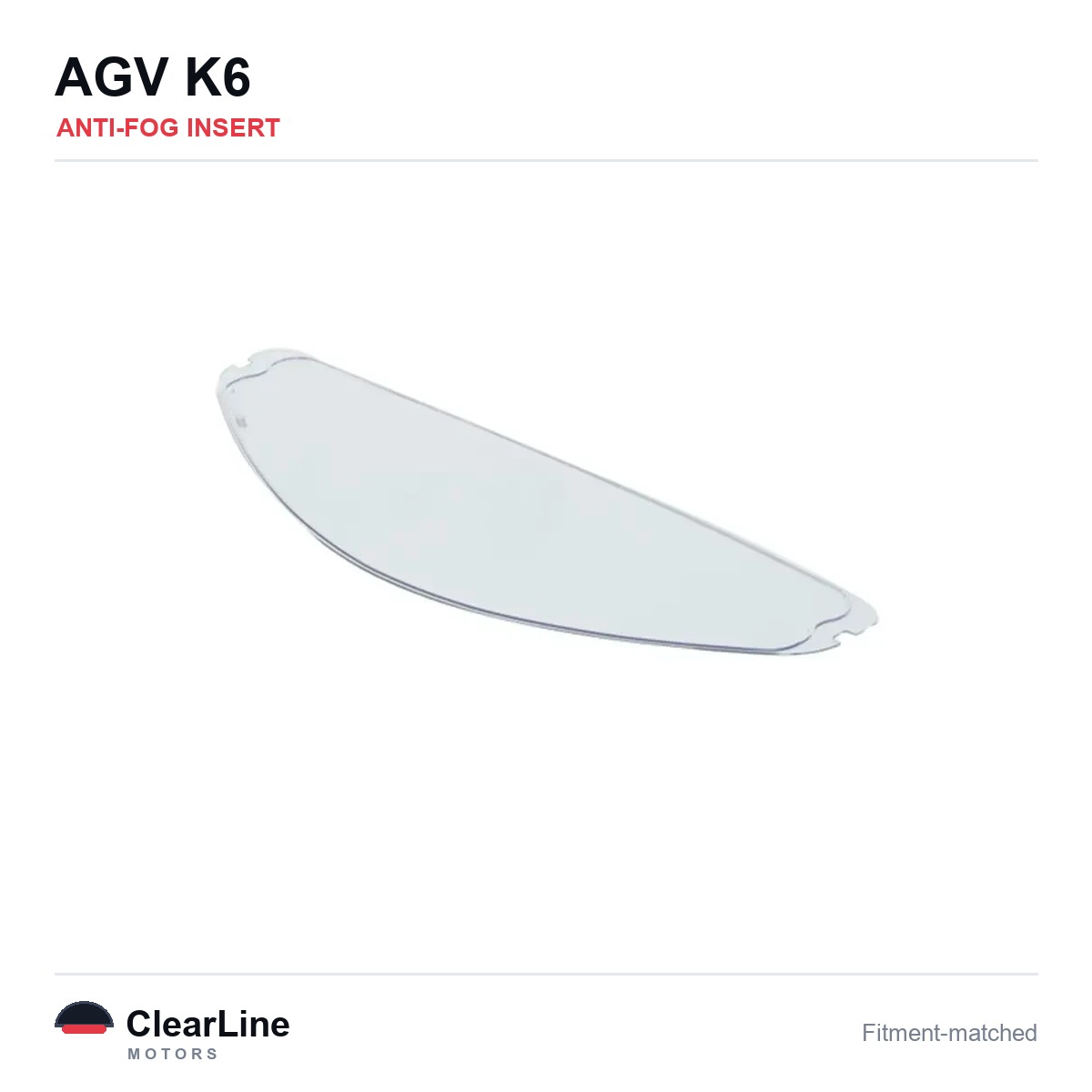
- AGV K6 Anti-Fog Insert — Stops Visor Fogging
- Screens and inserts that fit the AGV K6
- Pinlock-compatible inserts by helmet model
- See the clear replacement range
- Find the screen for your helmet with the visor finder
Frequently asked questions
Can I let a motorcycle visor air dry on its own?
You can, but on hard water it will spot. The minerals stay behind when each droplet evaporates in place. Drain the bulk of the water off first, blot what remains, then let the last traces air off.
Is it safe to dry a visor with a hairdryer?
No. Polycarbonate distorts well below the temperature a hairdryer reaches on its higher settings, and the distortion is permanent. It also deforms the seal that holds an anti-fog insert in place.
What cloth should I use to dry a motorcycle visor?
A clean microfibre cloth washed without fabric softener, kept for this job only. Paper towels and kitchen roll contain wood fibres harder than the visor’s hard-coat, so they mark it.
How do I dry the inside without damaging the anti-fog coating?
Blot it flat with almost no pressure and never use a circular motion. Treat the inner surface the way you would treat a camera lens, because the coating on it is about as durable.
Why does my visor smear every time I dry it?
Smearing usually means detergent residue rather than a drying fault. Rinse with clean water as the final step before drying, and check that your cloth has not been washed with fabric softener.
Should I dry the visor before storing the helmet?
Always. Trapped moisture encourages mould on the liner and corrosion on the pivot hardware. Dry the seal channel as well as the screen, and leave the helmet airing with the visor cracked open before it goes away.
Written by the ClearLine team, who spend rather too much of their working life looking at polycarbonate.